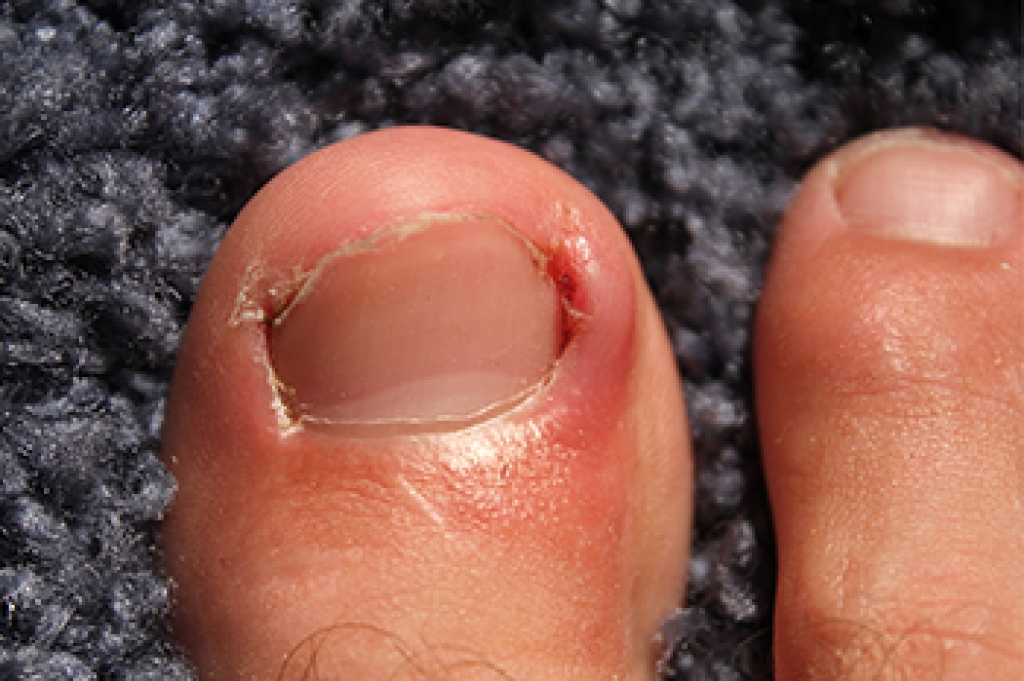
Mild and Severely Ingrown Toenails

There is no mistaking the pain from an ingrown toenail. It happens when the nail grows into the skin instead of over it, causing the surrounding skin to be red and tender. If prompt medical attention is not received, the ingrown toenail may bleed, become swollen, and infected. This foot condition can happen from wearing shoes or socks that are too tight, or if a heavy object should drop on the nail. Additionally, trimming the toenails incorrectly may be a reason an ingrown toenail can develop. Patients may temporarily find mild relief when they soak the affected foot in warm water. This can help the skin to become soft, making it easier to gently pull the nail away from the skin. People who are afflicted with an ingrown toenail may choose to wear larger shoes, which can help reduce any discomfort. If the ingrown toenail is severe, surgery may be necessary in providing permanent relief. If you have developed an ingrown toenail, it is strongly suggested that you confer with a podiatrist who can effectively treat this condition. 

Ingrown toenails can become painful if they are not treated properly. For more information about ingrown toenails, contact one of our podiatrists of Summit Podiatry. Our doctors can provide the care you need to keep you pain-free and on your feet.

Ingrown Toenails

Ingrown toenails occur when a toenail grows sideways into the bed of the nail, causing pain, swelling, and possibly infection.

Causes

  • Bacterial infections
  • Improper nail cutting such as cutting it too short or not straight across
  • Trauma to the toe, such as stubbing, which causes the nail to grow back irregularly
  • Ill-fitting shoes that bunch the toes too close together
  • Genetic predisposition

Prevention

Wearing proper fitting shoes and using proper cutting techniques will also help decrease your risk of developing ingrown toenails.

Treatment

Ingrown toenails are a very treatable foot condition. In minor cases, soaking the affected area in salt or antibacterial soaps will not only help with the ingrown nail itself, but also help prevent any infections from occurring. In more severe cases, surgery is an option. In either case, speaking to your podiatrist about this condition will help you get a better understanding of specific treatment options that are right for you.

If you have any questions, please feel free to contact one of our offices located in Wilmington, Whiteville, and Wallace, NC . We offer the newest diagnostic and treatment technologies for all your foot care needs.


Read more about Ingrown Toenail Care

X-Ray Needed for a Broken Ankle

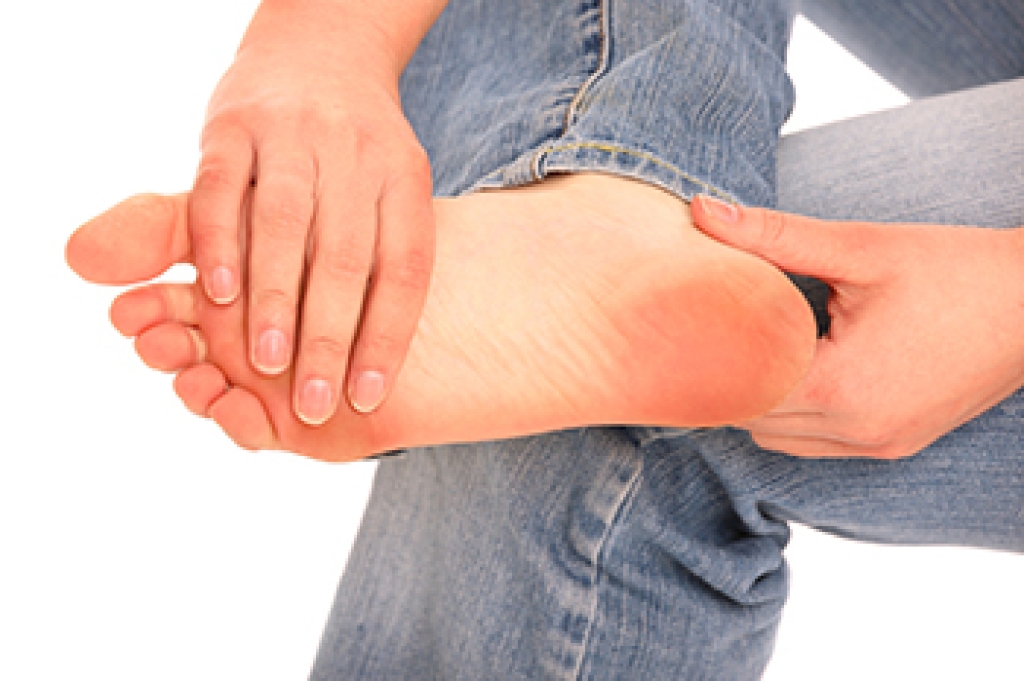
A broken ankle develops when an individual breaks, or fractures, one or more of the bones in the ankle area. In order to determine whether or not the ankle has in fact been fractured, a medical professional may perform an X-ray. An ankle X-ray can look at each of the different types of bones in the ankle, including the tibia, fibula, and talus. Importantly, there are different types of views that an ankle X-ray may capture. For example, this type of X-ray can present an AP, mortise, and lateral view. Each of these different types of views show various angles of the ankle area. Having an ankle X-ray taken is helpful for a medical professional and the patient because it can illuminate which areas of the ankle have been impacted. If you are someone that has recently broken their ankle, it is suggested that you contact a podiatrist today for an appointment.

Broken ankles need immediate treatment. If you are seeking treatment, contact one of our podiatrists from Summit Podiatry. Our doctors can provide the care you need to keep you pain-free and on your feet. 

Broken Ankles
A broken ankle is experienced when a person fractures their tibia or fibula in the lower leg and ankle area. Both of these bones are attached at the bottom of the leg and combine to form what we know to be our ankle.

When a physician is referring to a break of the ankle, he or she is usually referring to a break in the area where the tibia and fibula are joined to create our ankle joint. Ankles are more prone to fractures because the ankle is an area that suffers a lot of pressure and stress. There are some obvious signs when a person experiences a fractured ankle, and the following symptoms may be present.

Symptoms of a Fractured Ankle

  • Excessive pain when the area is touched or when any pressure is placed on the ankle
  • Swelling around the area
  • Bruising of the area
  • Area appears to be deformed

If you suspect an ankle fracture, it is recommended to seek treatment as soon as possible. The sooner you have your podiatrist diagnose the fracture, the quicker you’ll be on the way towards recovery.

If you have any questions, please feel free to contact one of our offices located in Wilmington, Whiteville, and Wallace, NC . We offer the newest diagnostic and treatment technologies for all your foot care needs.
Read more about Broken Ankle Causes, Differences, Symptoms and Treatments

Heel Pain and Weight Lifting

Heel pain is a fairly common symptom of a foot condition known as plantar fasciitis. Plantar fasciitis is caused when the plantar fascia, or band of tissue in the foot arch, becomes inflamed. Living with this heel pain caused by plantar fasciitis can be challenging, especially if you are someone that engages in weight lifting. Due to the extra strain that is caused by lifting weights, this could potentially make lifting weights with plantar fasciitis challenging. However, there are a number of steps that one might consider taking to make this activity easier. If your case of plantar fasciitis is not that severe and a medical professional has cleared you to engage in weight lifting, then you might consider warming up the feet before lifting weights to prevent the onset of pain or injuries. You might also try avoiding lifting weights on hard, uneven surfaces that might just aggravate the pain. If you are someone living with heel pain, it is suggested that you contact a podiatrist today for treatment.

Many people suffer from bouts of heel pain. For more information, contact one of our podiatrists of Summit Podiatry. Our doctors can provide the care you need to keep you pain-free and on your feet.

Causes of Heel Pain

Heel pain is often associated with plantar fasciitis. The plantar fascia is a band of tissues that extends along the bottom of the foot. A rip or tear in this ligament can cause inflammation of the tissue.

Achilles tendonitis is another cause of heel pain. Inflammation of the Achilles tendon will cause pain from fractures and muscle tearing. Lack of flexibility is also another symptom.

Heel spurs are another cause of pain. When the tissues of the plantar fascia undergo a great deal of stress, it can lead to ligament separation from the heel bone, causing heel spurs.

Why Might Heel Pain Occur?

  • Wearing ill-fitting shoes                
  • Wearing non-supportive shoes
  • Weight change           
  • Excessive running

Treatments

Heel pain should be treated as soon as possible for immediate results. Keeping your feet in a stress-free environment will help. If you suffer from Achilles tendonitis or plantar fasciitis, applying ice will reduce the swelling. Stretching before an exercise like running will help the muscles. Using all these tips will help make heel pain a condition of the past.

If you have any questions, please feel free to contact one of our offices located in Wilmington, Whiteville, and Wallace, NC . We offer the newest diagnostic and treatment technologies for all your foot care needs.

Read more about Heel Pain

Autoimmune Diseases and the Feet

Lupus, and other autoimmune diseases, can affect the feet. The most common symptoms of such diseases related to the lower extremities are swelling and pain from arthritis in the ankles and feet. Raynaud’s phenomenon is a common ailment of those with lupus as well. This phenomenon is when the autoimmune system attacks the small blood vessels in the feet and toes and causes them to constrict. This often causes discomfort and numbness and may even lead to ulcers and gangrene in the toes. Because the immune system is suppressed in those with autoimmune diseases, they are at a higher risk for developing infections, which often take longer to heal. If you have lupus or another autoimmune disease, it is suggested that you see a podiatrist who can help you navigate issues that may arise in your ankles and feet.

When dealing with systemic disease of the feet, it is extremely important to check the affected areas routinely so that any additional problems are caught quickly.  If you have any concerns about your feet and ankles contact one of our podiatrists from Summit Podiatry. Our doctors will assist you with all of your podiatric needs.

Systemic Diseases of the Feet

Systemic diseases affect the whole body, and symptoms usually are displayed in the feet. This condition can make a patient’s ability to walk unbearable.  Systemic diseases include gout, diabetes mellitus, neurological disorders, and arthritis.

Gout – is caused by an excess of uric acid in the body. Common symptoms include pain, inflammation, and redness at the metatarsal/phalangeal joint of the base big toe. Gout can be treated by NSAIDs to relieve pain and inflammation, and other drugs that lower the acid levels in the body.

Diabetes mellitus – is an increase in the level of blood sugar that the body cannot counteract with its own insulin. Failure to produce enough insulin is a factor in Diabetes.

Diabetes of the Feet

Diabetic Neuropathy – may lead to damaged nerves and affect the feet through numbness and loss of sensation.

Peripheral Vascular Disease – can restrict the blood flow to the feet, and often times lead to amputation of the feet. 

If you have any questions please contact one of our offices located in Wilmington, Whiteville, and Wallace, NC . We offer the newest diagnostic and treatment technologies for all your foot and ankle needs.

Read more about Systemic Diseases of the Foot

Connect With Us

Advanced Podiatric Procedures & Services in the New Hanover County, NC: Wilmington (Silver Lake, Myrtle Grove, Kings Grant, Hightsville, Wrightsboro, Ogden, Northchase, Murrayville, Bayshore, Kirkland, Wrightsville Beach, Eagle Island, Navassa, Leland), Columbus County, NC: Whiteville (Hallsboro, Artesia, Chadbourn, Clarendon, Sellerstown, Brunswick, Lake Waccamaw, Antioch, Bladen County, Clarkton, Abbottsburg) and Duplin County, NC: Wallace (Rose Hill, Teachy, Greenevers, Magnolia, Harrells, Chinquapin) and Pender County, NC: Watha, Burgaw, Murray Town areas